Smart Protection for a Mosquito-Free Yard
Flies can stress horses, spread disease, and make barns unpleasant to work in. Skeetercide provides targeted fly control for horses and barns with misting systems designed around your property’s specific needs.
Barns provide ideal conditions for flies to multiply, including manure, standing water, feed residue, and warm, still air. Stable flies and house flies can complete a breeding cycle in under two weeks, turning a small spring problem into a serious summer infestation.
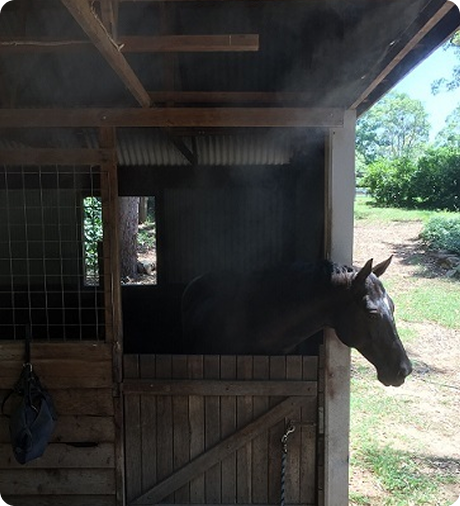
Repeated fly bites around the legs, belly, and face cause stomping, tail-swishing, skin irritation, and open wounds. Left unmanaged, this can affect grazing, sleep, and overall condition. A fly mister for barn use helps control fly populations without daily manual spraying or hanging strips.
.png)
Our system releases a fine, timed mist through nozzles placed around stalls, aisles, paddock fencing, and other high-traffic fly zones. The formulation is built to break down quickly in sunlight and air, so it does its job without leaving a lingering residue on surfaces horses come into contact with.

.avif)
.avif)
.avif)
Every barn has different fly pressure and layout. We build your fly control system around the areas where flies breed, gather, and bother your horses.
.png)
We assess stalls, ventilation, manure handling, water sources, and traffic patterns to identify where flies gather.
.png)
We map nozzle placement and misting zones based on your barn’s layout, airflow, and horse movement.
.png)
Our team installs tubing and nozzles with minimal disruption to daily barn operations.
.png)
We test each nozzle and set the misting schedule around the times flies are most active.
.png)
Regular refills and system checks keep your fly misting system working effectively throughout fly season.
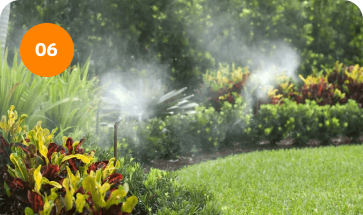
As fly pressure or barn conditions change, we adjust nozzle coverage and misting schedules to maintain effective control.
A barn runs on a schedule, and fly control has to work around it, not against it. Our fly pest control approach runs quietly in the background while you handle feeding, turnout, and daily care.


Once installed, the system runs on its own schedule with no daily effort required from your team.
.avif)
Stalls, aisles, wash racks, and manure areas get direct coverage instead of relying on one central point.
.avif)
Formulations and placement account for horses being present daily, not occasional visitors to the space.
.avif)
Less time spent on fly spray, strips, and traps that need constant replacing.
Effective fly control for horses and barns is not limited to installing a few nozzles. We consider your barn, horses, and daily operations to create a system that works reliably throughout fly season.
.avif)
We understand how Houston’s heat, humidity, and manure management can drive fly populations up.
.avif)
We plan nozzle placement around your stalls, paddocks, manure storage, and fly activity.
.avif)
We install and service your system with minimal interference, keeping your normal barn routines on track.
.avif)
Scheduled misting helps maintain steady fly pressure control throughout the season instead of relying on occasional treatments.
.avif)
Our team handles installation, refills, calibration, and adjustments throughout the season.
.avif)
We use formulations selected for barns where horses are present, and fly control is needed regularly.
See what local horse and stable owners have to say about their experience with SkeeterCide.

Sarah M.,
Porter, TX
.avif)
James R.,
Kingswood, TX
Skeetercide provides fly control services for barns, stables, and equestrian properties throughout the Northeast Houston area, including Porter, TX, Humble, TX, Kingwood, TX, Spring, TX, Dayton, TX, and The Woodlands. If you manage horses anywhere in these communities, our team can assess your property and put together a fly misting plan built around it.

Tell us about your barn and fly problem, and our team will recommend the right misting setup for your property.
FAQs

Professional fly control for horses and barns helps reduce fly populations that can stress horses, cause repeated biting, and create unsanitary conditions around the barn. A properly designed system provides more consistent control than occasional manual spraying.
Yes. Fly control can target areas around horse stalls where flies commonly gather, including feeding areas, manure zones, wash racks, and other high-activity areas.
Yes. Regular treatments and ongoing system maintenance help keep fly populations under control before they become a larger infestation. Proper manure and moisture management also play an important role.
Yes. Fly control services can be designed around the size, layout, stall count, ventilation, and fly pressure of your property. Larger barns may require multiple misting zones and strategically placed nozzles.
If flies are constantly around stalls, feed areas, manure storage, or horses, professional control may be worthwhile. Frequent stomping, tail-swishing, skin irritation, and difficulty keeping fly numbers down are also signs that your current approach may not be enough.