Commercial Mosquito Control for Recreation Areas
Scheduled mosquito fogging service for the open, high-traffic layout of public parks, such as ball fields, playgrounds, picnic pavilions, and the trails that connect them.
Parks are where families spend hours outside, and that's exactly why mosquitoes gather there too. A well-kept park has shade trees, standing water, and thick grass, which is everything a mosquito population needs to thrive.
Sunscreen and bug spray only cover the person wearing them. Professional park fogging delivers the wide-area coverage needed to actually reduce mosquito pressure across the trails, fields, and gathering spaces your community uses every day.
.webp)
.webp)
SkeeterCide treats the full footprint of a park property, not just the areas closest to the parking lot. Our mosquito fogging knocks down the active mosquito population and keeps numbers low until the next scheduled treatment.

.avif)
.avif)
.avif)
Parks aren't laid out like a residential street, so our crews plan each treatment around how the property is actually used.
.webp)
Before the first treatment, we analyze and mark areas where mosquitoes are concentrating, such as pond banks, drainage swales, dense shade, and tall grass near fence lines.
.webp)
A tech will move through the park area treating open turf and foliage, releasing a fine mist that reaches the vegetation and low areas where mosquitoes rest during the day.
.webp)
Parks stay on a repeating service calendar during mosquito season, since a single treatment only holds for so long against a property this size.
A park has more standing water, more shade, and more foot traffic during open hours than almost any other property type in a neighborhood, which is exactly why mosquito pressure builds up quickly if it's left unmanaged.

A single fogging run reaches ball fields, trails, and picnic areas together, instead of treating each section separately.
.avif)
Near pond edges, culverts, and shaded brush get direct treatment, not just the open lawn areas people walk past.
.avif)
Evening practices, weekend leagues, and after-school visits happen without the swarm that usually shows up at dusk.
.avif)
Parks bordered by residential streets or walking trails see stronger results when both areas are on a fogging schedule together.
Protecting parks, trails, sports complexes, and other public spaces requires more than standard mosquito control. SkeeterCide combines commercial-grade equipment, experienced technicians, and treatment plans according to Houston's climate and the unique demands of large recreation properties.
.avif)
Our UTVs with mounted ULV equipment are set up for large open-turf properties and trail networks not scaled down for a single yard or street.
.avif)
Crews work dusk and early-morning hours, when mosquitoes are out and pollinators are not, to avoid contact with non-targeted insects as much as possible.
.avif)
Heat, humidity, and rainfall patterns here drive our scheduling, so treatments land when mosquito activity is highest.
.avif)
Every fogging vehicle is tracked so the same ground gets covered visit after visit, with no gaps in the route.
.avif)
A neighborhood pocket park and a 200-acre rec complex get two very different service plans, built around their layout and traffic.
.avif)
Applications are handled by licensed pest control staff trained specifically in public-space mosquito control.
Our results are reflected in the feedback we receive from the organizations responsible for maintaining public parks and recreation areas throughout the Houston region.

Maintenance Coordinator, Kingwood, TX
.avif)
HOA Community Manager, Atascocita, TX
SkeeterCide services public parks and recreation properties across Northeast Houston, including Kingwood, Humble, Atascocita, Porter, New Caney, Spring, and The Woodlands. Don't see your area on the list? Reach out anyway. We're adding new service zones regularly.

Our customized mosquito fogging schedule helps reduce mosquito activity throughout Houston's peak season, so give us a call and make recreational areas mosquito-free.
FAQs
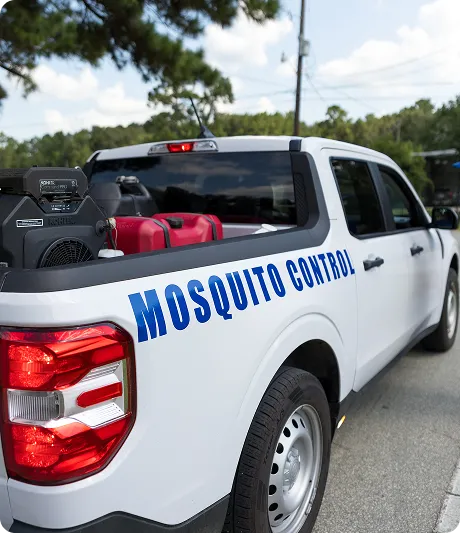
Dusk and early morning, since mosquitoes are most active then and wind conditions typically allow the mist to settle across turf and vegetation. Also, this time frame avoids non-target insects.
Yes. A single visit treats the full property in one pass, including playground areas, footpaths, fields, and shaded perimeter areas, rather than isolated spots.
Once the mist has settled and dried, the property is safe for normal use. Timing on re-entry can shift slightly depending on conditions that day, so our crew can flag anything site-specific.
A treatment every 3 weeks is standard through peak season. Spacing treatments out further lets mosquito populations rebound between visits.
Yes, and it typically produces better results. A park bordered by residential streets benefits when both are treated on the same rotating schedule.