How do you know if an animal is hiding in your attic? Scratching, scurrying, or thumping sounds may be the first clue that wildlife has found its way inside.
Other signs include droppings, unusual smells, nests, disturbed insulation, and chewed materials. You can also notice animals coming and going through vents, soffits, or gaps around the roof.
If you're wondering about signs of wildlife in an attic, scratching noises, droppings, odors, nesting materials, damaged insulation, and unusual activity around roof openings can indicate an animal has gotten inside.
Since bats, raccoons, squirrels, and rodents leave different clues, paying attention to these details can help you identify the visitor before it causes more damage.
Common Signs of Wildlife in an Attic
1. Strange Noises in Attic And What They Tell You
Sound is the first sign that something is moving around in your attic. The type of noise and when you hear it can clue you into what may be inside.
- Scratching or scurrying at night: It points to rats, mice, or raccoons, which are more active after dark.
- Chirping or quick scratching during the day, especially early morning: Common with squirrels.
- Fluttering or soft rustling around dusk or dawn: It indicates that bats are moving in or out to feed.
- Heavy thumping or dragging sounds: Can come from larger animals such as raccoons or opossums.
If the noise keeps coming from one specific corner at about the same time each day, the area may be a nesting or resting spot rather than a place the animal simply passes through.
2. Droppings and Urine Stains
Droppings are one of the clearest signs that an animal is using your attic. They can also provide clues about what you're dealing with, although some species leave very similar-looking waste.
- Mouse droppings: Tiny, usually only a few millimeters long.
- Rat and squirrel droppings: Larger and similar enough that they can be difficult to tell apart by sight.
- Raccoon and opossum droppings: Similar to small dog waste and found repeatedly in one area. Raccoons commonly use the same spot as a latrine.
- Bat droppings (guano): Small, dark, and shiny, often collecting directly below roosting areas.
- Bird and snake waste: Appears as a whitish, liquid residue rather than solid pellets.
You can also find urine stains on insulation, wooden beams, or ceiling drywall. These can look dark or greasy and often have a strong ammonia-like smell.
3. Gnaw Marks and Chewed Materials
Rodents need to keep their continuously growing teeth worn down, so they regularly chew wood and other materials. Squirrels and rats can be especially destructive in attics.
Check for chewing on:
- Wood framing and roof decking
- Stored boxes, fabric, or holiday decorations
- HVAC ductwork
- Electrical wiring
Pay close attention to chewed electrical wiring. Exposed or damaged wires can create a serious fire hazard, making this more than just a repair issue.
4. Nesting Material
Once an animal decides to stay in your attic, it builds a nest or creates a sheltered resting area.
- Rodents and squirrels: May shred insulation, paper, fabric, or leaves to make compact nests.
- Raccoons: Create looser bedding areas in corners or near a chimney chase.
- Birds: May build twig-and-debris nests near vents, soffits, or eaves.
You may not always find a complete nest. Flattened, torn, or displaced insulation can be the first physical sign that an animal has been using the area.
5. Foul or Ammonia-Like Odors
A new, persistent smell in the attic can be another warning sign. A musty, sour, or strong ammonia-like odor can come from accumulated urine and droppings, or from a dead animal.
If the smell seems to move through your HVAC system, take it seriously. Air from the attic can carry odors and contaminants into your living space, so investigate the source promptly.
6. Rub Marks and Entry Points
Wildlife uses the same opening repeatedly. Dirt and oils from an animal's fur can build up around the edges and leave visible marks.
Look for:
- Dark, greasy smears around vents, soffit gaps, or roofline openings
- Chewed or torn areas around fascia, rooflines, or gable vents
- Loose or missing shingles near a concentrated area of damage
The size of the opening can also provide a clue. Mice can squeeze through very small gaps, squirrels can enlarge openings several inches wide, and raccoons can tear open much larger damaged areas when trying to get inside.
7. Ceiling Stains or Sagging
Not every ceiling stain comes from a roof leak. Wildlife urine can soak insulation and eventually stain the drywall below.
If a stain appears even without recent rain, check the attic before assuming the roof is leaking. A ceiling that feels soft or begins to sag also deserves prompt attention because moisture or contamination may be affecting the area.
8. Actually Seeing the Animal
Seeing the animal itself is one of the clearest signs, although many attic animals stay hidden.
You may notice:
- A squirrel running along the roofline during the day
- Bats flying out from a roof gap around dusk
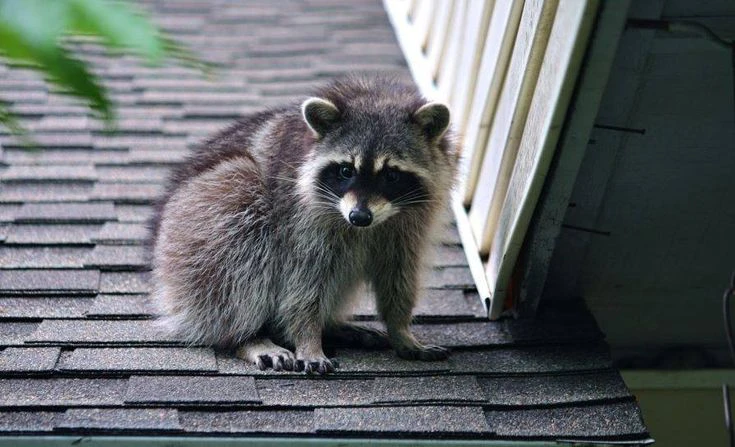
- A raccoon climbing onto the roof or entering an opening
A raccoon seen during the day does not automatically mean it is sick, but unusual daytime behavior can sometimes indicate illness or another problem. Keep your distance and avoid handling or cornering the animal.
Signs of Different Wildlife in Your Attic
The animal's activity pattern, waste, and type of damage can help distinguish one attic visitor from another.
Signs of Raccoons in Attic
- Heavy nighttime movement: Loud footsteps, thumping, or dragging sounds.
- Raccoon latrine: Several piles of dark, tubular droppings in the same location.
- Torn entry points: Damaged soffits, roof vents, fascia, or chimney areas.
- Flattened insulation: Compressed areas where a raccoon repeatedly rests.
- Strong odor: Noticeable urine or fecal smell near resting or latrine areas.
Signs of Squirrels in Attic
- Daytime activity: Scratching and running sounds mainly after sunrise.
- Chewed roof components: Gnaw marks around fascia, vents, or roof edges.
- Nesting material: Leaves, shredded insulation, paper, or other soft material gathered together.
- Damaged wiring: Fresh tooth marks or exposed sections of electrical cable.
- Roof activity: Squirrels repeatedly traveling along the roof near the suspected entry point.
Signs of Bats in Attic
- Dusk activity: Bats flying out of roof gaps shortly after sunset.
- Guano accumulation: Small, dark droppings directly beneath roosting areas.
- Roost staining: Dark discoloration around cracks, vents, or other exit points.
- Light sounds: Faint squeaking, scratching, or fluttering from concealed roosts.
- Repeated entry and exit: Bats using the same opening at dusk and before daylight.
Signs of Mice and Rats in Attic
- Small droppings: Numerous pellet-like droppings along walls, insulation, or stored items.
- Gnaw marks: Fresh tooth marks on cardboard, plastic, wood, or wiring.
- Runways: Narrow, repeatedly traveled paths through insulation or along edges.
- Nesting: Shredded paper, cardboard, fabric, or insulation tucked into sheltered spaces.
- Urine staining: Small, repeated stains or a persistent urine odor near active areas.
Signs of Birds in an Attic
- Chirping: Repeated calls from a specific vent, soffit, or roof cavity.
- Nest construction: Twigs, grass, feathers, and leaves gathered into a structured nest.
- Daytime entry: Birds repeatedly flying into and out of the same opening.
- Feather accumulation: Loose feathers around the nest or entry point.
- Dropping deposits: White-and-dark bird droppings beneath nesting or roosting areas.
Health and Safety Risks Worth Taking Seriously
Wildlife in the attic can create more than noise and property damage. Droppings, urine, nesting materials, and contaminated insulation create health and safety concerns, especially during cleanup.
- Hantavirus: The CDC says hantavirus can spread when people inhale dust contaminated with infected rodent urine, droppings, or nesting material. Avoid sweeping or vacuuming dry rodent waste because it can send contaminated particles into the air.
- Histoplasmosis: This fungal infection can develop when people inhale spores from soil or material contaminated with bird or bat droppings, particularly when large amounts of waste have accumulated.
- Leptospirosis and raccoon roundworm: Raccoon waste can carry organisms that cause these infections, so handle raccoon latrines with appropriate precautions.
- Indoor air quality: Strong odors and contaminated particles can become a concern if attic air moves through HVAC systems. Moisture and animal waste can also contribute to mold or attract insects.
These risks don't mean every attic animal will make you sick. They do mean that large amounts of droppings, contaminated insulation, or a dead animal are better handled with proper precautions than a broom and dustpan.
What to Do If You Suspect Wildlife in Your Attic
- Don't sweep or vacuum dry droppings or nesting material. If cleanup is necessary, follow appropriate CDC precautions for the type of animal and contamination involved.
- Don't try to corner or handle wildlife. Raccoons, bats, and other animals can become defensive when trapped or threatened.
- Check whether young are present. During breeding and nesting seasons, removing a mother without addressing her young can create a bigger problem.
- Contact a qualified wildlife professional if you can't safely identify or remove the animal. A professional wildlife control can identify the species, locate entry points, and recommend appropriate exclusion.
- Repair and seal the entry point after removal. Otherwise, another animal may use the same opening to get inside.
How to Prevent Wildlife From Coming Back
Once wildlife is out of your attic, the next step is making sure it doesn't find its way back in. Seal the opening it used, repair damaged soffits and fascia, cover vents and chimneys, and trim branches that give animals easy access to your roof.
Keeping gutters clear and storing pet food and birdseed in sealed containers can also reduce attractants around your home.
If you're dealing with recurring wildlife activity around your property, SkeeterCide can help you take a proactive approach to pest and wildlife prevention. Don't wait for scratching sounds or damage to become a bigger problem.
Contact SkeeterCide today to protect your home and keep unwanted wildlife from coming back.