By
|
September 7, 2026
A raccoon in the attic can be a much bigger problem than you think. These animals are strong climbers and can easily reach roofs, squeeze through damaged vents or soffits, and turn a quiet attic into a den.
Once inside, they can tear through insulation, leave droppings and urine, damage wiring or roofing materials, and create a mess that costs far more to fix than the original entry point.
We’ve seen how quickly an attic becomes a raccoon’s den. The problem is that most homeowners don't find the animal itself; they find what it left behind. And simply spotting a raccoon in your yard doesn't mean it has moved into your attic.
That's why knowing the signs matters. If you are hearing something overhead or have noticed something unusual in your attic, here are 10 common signs a raccoon is living in your attic and what to look for before the problem gets worse.
Raccoons are most active after dark, so attic activity starts around dusk and continues through the night. Because an adult raccoon can weigh 10 to 30 pounds, its movement sounds heavier than a mouse or squirrel.
Listen for:
If you hear something that sounds like a heavy animal walking overhead after dark, check the attic for other signs of raccoon in attic activity.
Raccoons make several different sounds. An adult can growl, hiss, or snarl when it feels threatened. Mothers and young raccoons also make chattering, whining, and high-pitched crying sounds.
Pay attention to where the sound comes from. If repeated cries come from the same area of the attic, check for a den nearby. During spring and early summer, those sounds can come from baby raccoons staying close to their mother.
If you suspect babies are inside, do not seal the entry hole. Removing the mother without accounting for the young can leave the babies trapped inside.
A raccoon needs an opening to get into your attic. Check the exterior of your home for damage around:
A damaged opening near the roofline becomes one of the clearest signs of raccoons when you also hear activity inside the attic.
Look for torn screens, bent vent covers, loose materials, scratches, or gaps that weren't there before.
Raccoons have strong paws and can enlarge weak spots to create an entry. They also reuse openings created by other animals. A damaged opening near the roofline is especially important when you also hear activity inside the attic.
Raccoons can leave dark rub marks around an opening they use regularly. Their fur picks up dirt and debris, which transfers onto the wood, siding, or vent as they squeeze through.
Look for:
Fresh-looking marks around the same opening show that an animal is using that entry point repeatedly.
If the opening leads directly into your attic, this is a strong clue when investigating signs of a raccoon in the house.
Raccoon tracks are easy to recognize when you get a clear print. They have five long toes, giving the footprint a hand-like appearance.
Check dusty areas and disturbed insulation near:
A flashlight can help you spot tracks without walking through the attic. Avoid stepping into areas covered with droppings or other animal waste.
Raccoons disturb insulation when they create a place to sleep or raise their young.
Look for insulation that is:
You can also find shredded cardboard, paper, fabric, leaves, or other soft materials gathered into one area.
A concentrated pile of damaged insulation is one of the more noticeable raccoon signs in the attic, especially when it appears near an entry point.
Raccoons return to the same area to defecate. This creates a latrine, where you can find several piles of droppings in one location.
Raccoon droppings are usually:
A strong odor coming from one section of the attic, combined with a concentrated pile of droppings, is a serious sign of raccoon activity.
Important: Take raccoon feces seriously. The CDC warns that raccoon feces can contain eggs of Baylisascaris procyonis, a raccoon roundworm that can cause serious illness in people. Do not touch, sweep, or vacuum droppings without taking proper precautions.
Long-term raccoon activity can stain the area below the attic. Urine and moisture from contaminated insulation can soak into the materials underneath.
Check the ceiling below the attic for:
A ceiling stain does not always mean a raccoon is responsible. Roof leaks and plumbing problems can create similar damage. But when a stain appears directly below an area with raccoon droppings or contaminated insulation, you need to inspect both problems together.
Raccoons can damage more than insulation. While moving around an attic, they can tear flexible HVAC ducts, pull apart insulation around pipes, and damage exposed wiring.
Check for:
Damaged ductwork can affect how well your HVAC system heats or cools the house. Chewed electrical wiring is more serious because damaged insulation around wires can create a fire hazard.
If you find damaged wiring, avoid touching it and have a qualified professional inspect it.
Sometimes you see the raccoon before you find the damage.
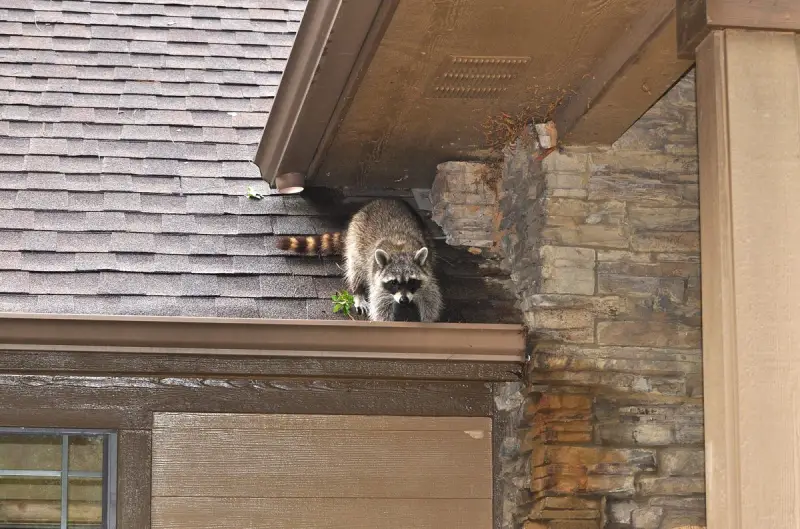
Watch your roofline around dusk and after dark. A raccoon climbing a downspout, walking across the roof, or disappearing into a soffit or vent gives you a useful clue about where it is getting inside.
One raccoon in the yard does not prove that your attic is occupied. But if you repeatedly see the same raccoon climbing onto your roof and entering the same opening, inspect that area for signs of an active den.
Seeing a raccoon in your yard is one thing. But if the animal repeatedly climbs onto your roof, walks along the soffit, or disappears into the same opening, those signs of a raccoon in your yard deserve a closer look.
If you have found several signs of raccoon activity in the attic, don't rush to seal the hole or try to catch the animal yourself. First, make sure the raccoon and any young raccoons are out of the attic.
A raccoon can have babies inside the attic, especially during the spring and summer. If you close the opening while the mother is inside, you can trap the young inside. If the mother is outside when you seal the hole, you can separate her from her babies.
Before sealing the opening, confirm that no raccoon or young raccoons remain inside.
A trapped raccoon can become aggressive when it feels cornered. Moving a live raccoon also involves wildlife regulations that vary by location.
In Texas, raccoons are classified as fur-bearing animals, and state regulations apply to their capture, possession, and relocation. Moving a trapped raccoon to another property without following the required rules is not a simple DIY task.
A licensed wildlife control professional can handle raccoon removal, check for young, and ensure the animal is excluded without creating another problem.
Removing the raccoon is only part of the job. If the opening remains, another raccoon can use the same route into your attic.
After confirming the attic is empty, inspect and repair:
The repair should be strong enough to prevent another animal from pushing or tearing its way inside.
Raccoon droppings, urine, nesting material, and damaged insulation can leave your attic contaminated even after the animal is gone.
If you find a raccoon latrine or a large amount of waste, avoid handling it yourself. Raccoon feces contain Baylisascaris procyonis, or raccoon roundworm, so contaminated areas require careful cleanup and proper protective measures.
Getting the raccoon out solves only the immediate problem. Finding how it got inside and closing that access point is what helps prevent another raccoon from moving in.
If you have found several signs of a raccoon in your attic, a professional inspection can identify the active entry point, check for young, remove the animal safely, and address the damage left behind.
Don't wait for the scratching to turn into damaged insulation, contaminated areas, or a costly repair. If you've noticed several signs of raccoon activity, the next step is a professional inspection, not a trap, a sealed hole, or a guess.
Our wildlife removal team will inspect the attic and roofline, identify the active entry point, check for young, safely remove the raccoon, and address the access point that allowed it inside.
If you suspect a raccoon is living in your attic, we're ready to help. Contact us today to schedule your wildlife inspection and get your attic back to normal.