
By
|
September 25, 2026
If you have noticed droppings, gnaw marks, scratching sounds, nesting material, or other signs of rats or mice, the goal is not simply to catch one rodent. You need to identify how they get inside, remove the conditions that attract them, and monitor the property afterward.
The most effective rodent pest control methods combine removal with prevention. Trapping or baiting can reduce rodents already inside, but sealing entry points, removing food and water sources, and eliminating shelter help prevent the infestation from returning.
If rodents can still get inside, trapping them is only a temporary fix. Sealing entry points is one of the most important rodent control methods.
Start outside and work your way around the house. Check for gaps around:
Pay attention to the smaller openings. The CDC notes that rodents can fit through gaps about 1/4 inch (6 mm) wide. A gap that looks harmless to a homeowner can be enough for a mouse to get inside.
For small gaps, materials such as copper mesh or steel wool combined with an appropriate sealant can help block access. Larger openings usually require more durable materials such as hardware cloth or metal flashing.
Expert tip: When inspecting your home, don't stop at the foundation. Check where utility lines and A/C components enter the building, as well as roof and attic areas. Rodents can use these openings to reach wall voids and other spaces of your home.
Once rodents find a dependable food source, your property can become worth returning to. The goal is to make food difficult for them to find and access.
Inside the house, focus on the food that tends to be left within easy reach:
Store food and animal feed in sturdy containers with tight-fitting lids. Clean spills as soon as they happen, keep garbage containers closed, and put pet food away when it isn't being used.
Don't overlook the exterior. Bird feeders, compost, outdoor garbage, grills, and spilled animal feed can all provide food close to the house.
Keep in mind: Cleaning up food won't remove rodents that are already established inside. It simply removes one reason they have to stay. Trapping and exclusion still need to address the active infestation.
Rodents need access to water, and outdoor sources are easy to overlook during a home inspection. Walk around the property after checking for food and entry points. Look for:
Houston's warm, humid climate can make moisture problems particularly easy to overlook. A slow leak or small area of standing water might not seem significant, but eliminating several dependable water sources can make the property less attractive to rodents.
Fix leaking fixtures, improve drainage where water repeatedly collects, and avoid leaving pet water outside overnight when it isn't necessary.
Important tip: Don't inspect for water sources only on a dry day. Areas that look fine in normal conditions can reveal drainage problems immediately after heavy rain.
Rodents don't need much space to hide. Overgrown vegetation, stacked materials, and clutter around a home can provide cover while they move between food sources and potential entry points.
Reduce these hiding places by:
Bird feeders deserve some attention as well. The feeder itself isn't necessarily the problem; the spilled seed underneath it can be. Keep feeders away from the house and clean up accumulated seed regularly.
Rule of thumb: Look at the area around the home from a rodent's perspective. If a protected route exists from food or water to a dark, sheltered space, you've found something worth correcting.
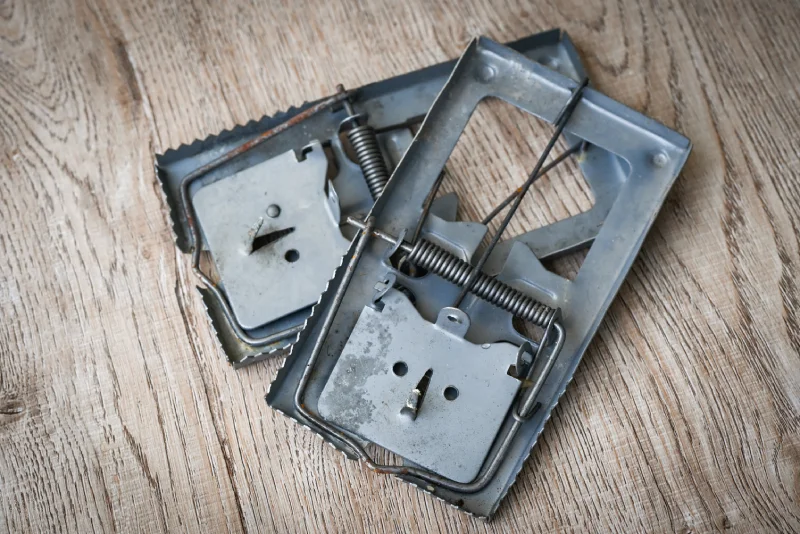
For confirmed indoor activity, snap traps are an effective removal option. They let you remove rodents directly without leaving poisoned bait inside the building.
Placement is critical. Put traps where rodents are already moving rather than scattering them randomly around the room. Good locations include:
Use enough traps to cover the active area, but don't assume that more traps automatically means better control. A well-placed trap on an established travel route is usually more useful than several traps in areas the rodent never visits.
Keep traps out of reach of children and pets, and always follow the manufacturer's directions.
Rodenticides are also used in rodent control, particularly when an infestation is persistent or traps alone aren't enough. But bait requires more careful handling than many homeowners realize.
If you use bait, place it only in a properly labeled bait station and follow the product label for placement, quantity, and use. Tamper-resistant stations limit access by children, pets, and other animals that aren't the target pest.
Before using rodenticide, consider:
Never scatter loose bait around a home or place it where children, pets, or wildlife can reach it.
Important: Don't assume that more bait means better control. The product label determines how much bait to use, where you can place it, and which pests it is intended to control.
Another practical issue with indoor baiting is that a rodent that dies somewhere inaccessible, such as inside a wall or ceiling, can create a persistent odor that is difficult to locate and remove.
Rodenticides don't all work the same way. Some require repeated feeding, while others can be lethal after a single feeding. Their risks to pets and wildlife also differ.
Common active ingredients fall into several groups:
Availability also varies by product and user. EPA restrictions apply to certain rodenticide products and packaging, so homeowners should not assume that a product used by a pest professional is available for consumer purchase.
Expert tip: When comparing rodenticide products, look at the active ingredient and EPA-approved label, not just the product name. The label is the best source for approved uses, placement requirements, precautions, and disposal instructions.
For anything beyond a straightforward consumer product, getting advice from a licensed pest professional is safer than choosing a rodenticide based solely on online information.
Good rodent pest control starts with knowing where the rodents are active. Treating every part of a property without first looking for evidence can waste time and make it harder to judge whether the treatment worked.
Start by looking for familiar signs such as:
You can also use non-toxic monitoring methods, such as tracking patches or monitoring blocks, to help identify active areas. These tools are particularly useful when the signs of infestation aren't obvious.
Monitoring is just as useful after treatment. If fresh droppings or new gnaw marks keep appearing, the infestation hasn't been fully resolved, or another entry point needs attention.
Expert tip: Don't judge success simply because you haven't seen a rodent for a few days. Look for a sustained absence of fresh signs in the areas where activity was previously confirmed.
Ultrasonic repellers, predator scents, and other rodent deterrents are easy to find, but they shouldn't be the foundation of an infestation-control plan.
These products are often marketed as a simple way to drive rodents away. In practice, their effectiveness can vary, and they don't address the conditions that allowed rodents to establish themselves in the first place.
If you decide to use a deterrent, treat it as an optional supplement to more reliable control measures such as:
DIY control makes sense for some minor rodent problems. But once rodents are established, keep returning, or are occupying areas you cannot safely access, professional help can save considerable time and repeated effort.
Consider calling a pest professional when:
In Texas, the Texas Department of Agriculture's Structural Pest Control Service regulates structural pest control professionals who apply pesticides for hire. Licensing requirements help ensure that technicians understand pesticide use, safety requirements, and applicable state regulations.
A professional treatment should involve more than putting down bait. A good inspection looks at how the rodents are getting in, where they're active, what is attracting them, and what needs to change to prevent the problem from returning.
For larger or recurring infestations, that combination of inspection, exclusion, removal, and follow-up is more effective than repeatedly treating the symptoms.
For a small, isolated problem, sealing entry points and using properly placed traps are enough. But if you keep finding fresh droppings, hear rodents in walls or the attic, or the problem keeps coming back, professional rodent control is usually the better option.
They identify entry points, determine where rodents are active, remove them safely, and address the conditions allowing them to return. That makes professional help especially useful when DIY methods don't resolve the problem.
If rodents keep coming back despite your efforts, it’s time to address the problem at its source. SkeeterCide can inspect your property, identify entry points, remove active rodents, and help prevent future infestations.
Contact SkeeterCide today to schedule a rodent inspection in the Houston area!