By
|
August 27, 2026
When a wild animal gets into your home, the first decision is often whether to handle the problem yourself or bring in a professional. This guide answers that question. We will cover what professional wildlife removal involves, why so many people try DIY wildlife removal first, and where DIY methods genuinely fall short. We will also walk through a full DIY humane wildlife removal vs. professional service comparison, factoring in health risk, wildlife law, timing, and long-term cost.
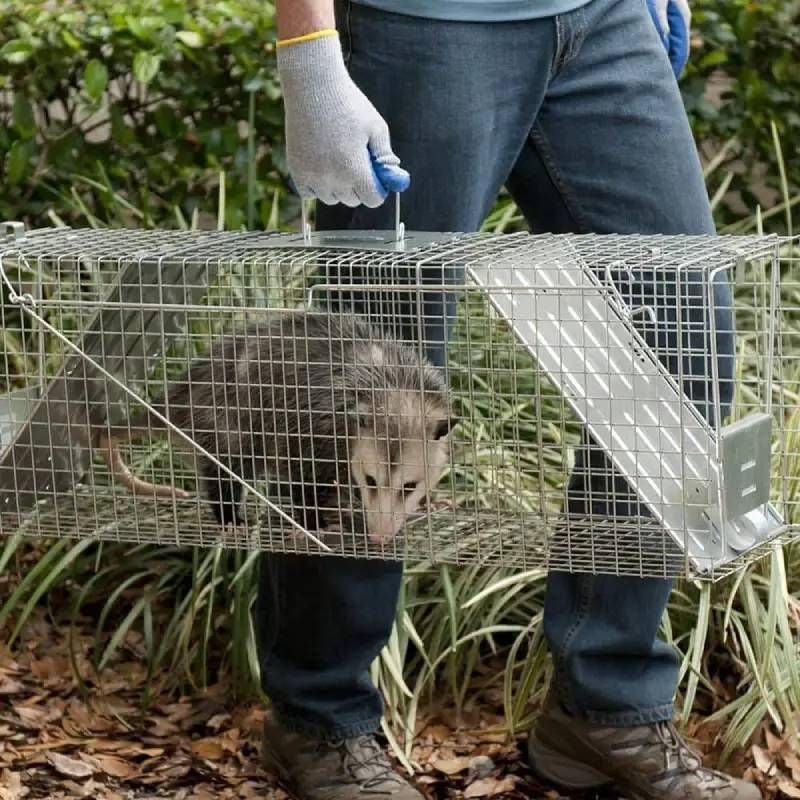
Professional wildlife removal is the practice of identifying, capturing, and relocating or excluding nuisance wild animals from a home or property. The person doing it is trained, licensed, and insured for that specific job.
A wildlife removal operator, often called a Nuisance Wildlife Control Operator (NWCO), is trained in animal behavior, humane trapping standards, structural exclusion, and the wildlife laws tied to each species.
DIY wildlife removal is understandably tempting. A live trap costs $30 to $80. A can of repellent costs $15. Next to a $300 to $600 service call, the math looks obvious on paper.
Speed is another factor. Nobody wants to wait two or three days for an appointment while an animal keeps scratching above the bedroom ceiling.
There is a real DIY tier that works well:
None of that requires a license in most places, and none of it puts you in close contact with an animal that might bite, scratch, or carry disease.
The trouble starts when that same confidence gets applied to bigger problems: an active litter in the attic, a bat colony in a wall void, a raccoon that has been denning in a chimney for weeks, or any animal acting sick, cornered, or aggressive.
DIY wildlife removal can work for straightforward situations, but it becomes much harder when the problem is bigger, less visible, or more complex than it first appears. Several common mistakes can turn a manageable wildlife issue into a recurring one.
A single scratching noise can mean one mouse. It can also mean forty. Homeowners routinely underestimate colony size, especially with bats and rodents, because they never actually see how many animals are living inside a wall cavity or attic.
A one-time trap or a single sealed gap addresses the animal you can see. It does nothing for the ones you cannot.
A wild animal that looks calm can turn aggressive the moment it feels cornered. A mother defending young is far more dangerous than the same species alone. Raccoons in particular have sharp claws and a strong bite, and an amateur trapping attempt puts hands and forearms directly in range.
More than 90 percent of the roughly 4,000 animal rabies cases reported in the United States each year occur in wildlife. Bats, raccoons, skunks, and foxes account for the large majority of human rabies exposures (CDC).
In the raccoon rabies reservoir zone that covers the eastern half of the country, roughly one in ten raccoons that come into contact with people or pets test positive for rabies (CDC).
Bats add another layer of risk. A bite or scratch can go unnoticed entirely, which is why any direct contact with a bat is treated as a possible exposure requiring medical evaluation (CDC Yellow Book).
Rabies is not the only concern:
A licensed operator wears the right protective equipment and knows the correct decontamination protocol. Most homeowners own neither.
This is the most common reason homeowners end up calling a professional anyway, after the DIY attempt has already gone wrong.
A homeowner seals an entry point without confirming the attic is empty. A mother animal or her young becomes trapped inside the wall, dies there, and the smell and insect activity that follow are worse than the original problem. The wall often has to be opened up just to remove the carcass.
Or a homeowner sets one trap, catches one squirrel out of a litter of four, and calls the job done. Scratching resumes within a week.
Removing the animal you can see solves maybe half the problem. Long-term control depends on finding and permanently sealing every entry point an animal used, or could use. That takes an experienced eye for the gaps, gable vents, and roofline seams that homeowners routinely miss.
This is a factor that can make or break a removal attempt on its own.
A professional wildlife removal is planned around this calendar automatically.
A few persistent myths cause more DIY failures than any single technique problem.
"Mothballs and ammonia drive animals out." Both are commonly recommended online. Neither is proven effective at removing an established animal, and both create their own health hazard if used in an enclosed attic space.
"Ultrasonic repellent devices work." Independent testing has repeatedly found little evidence that these devices reliably deter established wildlife, especially once an animal has already denned in a space.
"If I stop seeing the animal, it's gone." Nocturnal species like raccoons and bats are frequently active only at night. The absence of daytime sightings says nothing about if the animal, or a colony, is still present.
"One trap catches the whole family." Traps catch one animal at a time. A litter of four to six young, common with raccoons and squirrels, usually needs several trap placements or a hand-removal approach a licensed operator is trained for.
"Relocated animals just live happily somewhere else." Relocated wildlife faces real survival challenges in unfamiliar territory, competition from resident animals, and unfamiliar food sources. This is part of why many states now regulate or restrict relocation distance.
Both DIY and professional wildlife removal can be humane. The bigger difference comes down to training, consistency, safety, and legal compliance.
DIY: Usually lower upfront costs, around $20 to $100 for basic supplies.
Professional: Typically costs more, with professional removal averaging around $200 to $650.
DIY: Often relies on guesswork, online photos, or visible signs.
Professional: A technician can identify the species and assess the situation on-site.
DIY: You are responsible for knowing and following applicable wildlife laws.
Professional: Licensed operators are trained to work within relevant regulations.
DIY: May involve direct contact with wildlife, droppings, nests, or contaminated areas without proper protection.
Professional: Uses protective equipment and established handling techniques to reduce exposure and injury risks.
DIY: Young animals or active nests can easily be overlooked, leading to poorly timed removal.
Professional: The technician checks for young and nests before deciding how and when removal should be carried out.
DIY: Homeowners may seal the obvious opening but miss other access points.
Professional: Includes more comprehensive exclusion work and may come with a warranty.
DIY: Partial removal or incomplete exclusion can lead to repeat infestations.
Professional: Proper exclusion can reduce the likelihood of wildlife returning to the same space.
DIY: Small, visible, low-risk situations where you are confident about the species and know the animal is alone.
Professional: Attics, chimneys, wall cavities, colonies, protected species, young animals, or situations where you're unsure what you're dealing with.
Check these before hiring:
Removal solves the immediate problem. Wildlife prevention keeps it solved. A few habits make a measurable difference:
To be fair to the DIY side, plenty of situations do not need a professional at all:
Watch for the line where this stops applying: any enclosed space you cannot fully see into, a species you cannot positively identify, signs of young animals, or a protected species like a bat, migratory bird, or in many states, a raccoon or skunk that legally requires a license to trap.
Professional wildlife removal earns its cost through things a quick internet search and a hardware store trap cannot replicate, like correct species identification, humane and legal handling, seasonal timing, and exclusion work that actually stops repeat infestations.
DIY wildlife removal has a real place for small, visible, low-risk situations. The moment a job involves an enclosed space, a protected species, young animals, or any doubt about how many animals are actually there, the balance tips clearly toward a licensed operator.
Check your state's wildlife agency site if you are ever unsure if a species you are dealing with needs a professional. It is a five-minute step that can save a fine, a health scare, or a repeat call once the animal, or its neighbor, finds a way back in.
Is DIY wildlife removal illegal?
Not always, but it depends heavily on species and state law. Trapping certain animals out of season, disturbing an active bird nest protected by the Migratory Bird Treaty Act, or relocating a trapped animal off your property can all be illegal, even on your own property.
Does homeowners insurance cover wildlife damage?
Usually not. Standard policies exclude damage caused by rodents, birds, and insects, and coverage for larger mammals like raccoons is inconsistent at best. Coverage is more likely only if wildlife activity causes a secondary event, such as an electrical fire.
Can I trap and relocate an animal myself?
In many states, yes, for common non-protected species. Several states restrict where a trapped animal can legally be released, and some require a license for any trapping outside the regular hunting or trapping season.
What is the biggest health risk with DIY wildlife removal?
Rabies exposure is the most serious concern, particularly with raccoons, bats, skunks, and foxes, which together account for the large majority of wildlife rabies cases in the United States. Roundworm, histoplasmosis, hantavirus, and leptospirosis are additional risks tied to droppings and nesting material.