By
|
June 10, 2026
A mosquito misting system installation is a professional setup of an automated outdoor system that sprays a fine insecticide mist around your yard at scheduled times. It reduces and controls mosquito populations, providing full-yard mosquito protection.
If you’re struggling with mosquitoes taking over your outdoor space, this system is designed to solve the problem. Instead of relying on temporary sprays or candles, a misting system creates a continuous protective layer.
The American Mosquito Control Association (AMCA) mentions that effective mosquito control requires targeting both adult mosquitoes and their resting areas, which is why perimeter-based treatments, such as misting systems, are commonly used in residential pest management.
In this guide, we’ll break down how a mosquito misting system installation works, what it includes, the real benefits and drawbacks, and what you should know before getting one installed in your home.
A mosquito misting system is an automated outdoor pest control setup that releases a fine insecticide mist through a network of nozzles positioned around your property.
The system runs on a scheduled timer, usually triggering at dawn and dusk, and delivers short, targeted spray cycles to kill and repel mosquitoes where they live and rest.
For Houston homeowners, the "automated" part really matters. You can't manually spray your yard every day from February to November.
A misting system runs whether you're home, whether you remembered, or whether you have guests coming in an hour. That consistency is what separates it from every other DIY mosquito control method.
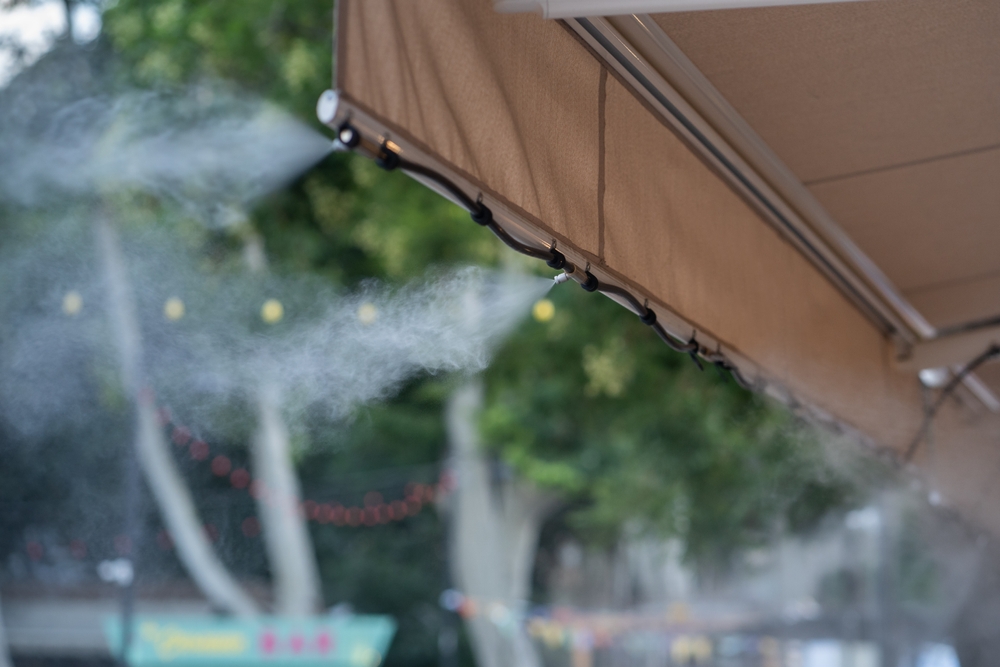
The mechanics are simple. A reservoir tank holds a diluted insecticide solution. A pump pressurizes it and pushes it through polyethylene tubing that runs along your fence line, home eaves, garden beds, or landscaping.
At each nozzle, the pressurized liquid is atomized into ultra-fine droplets.
That mist does two things.
Mosquitoes spend 90% of their time sitting on the underside of leaves and in dense vegetation. When they land on treated surfaces, they absorb the insecticide and die.
A timer triggers cycles automatically. Most systems run 30–60 second cycles, two to four times per day.
Higher-end systems can be adjusted via smartphone app and include sensors that pause the system during rain, where afternoon storms can roll through quickly and wash insecticide off vegetation.
The right choice depends on yard size, budget, and how much involvement you want after installation.
The most common setup for Houston homes. A 55-gallon drum holds the insecticide solution. A pump draws from it and distributes through tubing to all nozzles.
Drum-based systems are the better choice for larger lots as they hold more solution and need fewer refills. Most Houston properties from Cypress to Baytown that sit on half an acre or more should go drum-based.
These connect to a smaller, concentrated insecticide cartridge instead of a large drum. They are compact and easy to install, and they work well for smaller urban lots or townhome-style properties with tight perimeters. The tradeoff is more frequent cartridge replacements.
The gold standard for Houston's climate is an automated system to remove all types of mosquitoes. Fully automated systems run on preset schedules with no input needed.
Top-tier models automatically adjust spray timing based on real-time sunrise/sunset data, so your system is always treating at dusk even as the days get shorter in fall and longer in spring.
You activate these by pressing a button or using a remote. Cheaper upfront, but in Houston, "remembering to spray" every evening is exactly what doesn't happen. Manual systems deliver inconsistent results in a nine-month mosquito season.
For a Houston backyard, you can plan on a full day for DIY installation or a half-day professional misting appointment.
Important tip: Use nickel-plated brass nozzles, not plastic. Houston's hard municipal water causes mineral deposits that clog plastic nozzles within weeks. Brass holds up significantly longer and is easier to clean when buildup does occur.
Before any insecticide goes in the tank, fill it with clean water and run the system. Walk the entire perimeter during an active cycle and look for:
Set your schedule. In Houston, the standard starting point according to the CDC is:
During July and August, peak mosquito season and best time to spray, many homeowners add a third cycle at 10–11 PM for extra Culex control (Culex mosquitoes are active until midnight). Reduce to two cycles in spring and fall when temperatures moderate.
Professional installation requires $1,800–$3,500 for a complete mosquito misting system. The mosquito control cost depends on yard size, nozzle count, and system type. Most Houston suburban lots land in the $2,000–$2,800 range.
A suburban backyard (around 350–500 linear feet of perimeter) requires roughly 30–45 nozzles, depending on spacing, which influences final installation cost.
Commercial properties, community spaces, or larger estate lots with complex perimeters can exceed $4,000 for full installation.
A quality DIY drum kit for a Houston-sized yard runs $350–$900 in components, depending on nozzle count and system quality. Your labor is the savings.
However, DIY systems can present challenges such as uneven nozzle spacing, inconsistent pressure, and reduced long-term durability if components are not installed correctly or maintained regularly.
Go professional if:
DIY is a solid choice if:
How many nozzles does my Houston yard need?
A simple formula: measure your total perimeter footage and divide by 10 to get your minimum nozzle count. A suburban backyard with a 200-foot perimeter needs about 20 nozzles as a baseline. Add extra nozzles (every 8 feet) along any fence line bordering green belts, drainage areas, or bayou corridors.
Is pyrethrin safe around my Houston garden and vegetable beds?
Pyrethrin breaks down quickly in sunlight within a few hours under the direct Texas sun. Avoid spraying directly onto edible vegetable beds, and don't harvest for 24 hours after treatment in adjacent areas.
Do I need a permit or license to install a misting system in Texas?
Homeowners applying pesticides on their own property for their own residential use do not need a pesticide applicator license in Texas. However, any pest control company performing installation or service must hold a valid Texas Department of Agriculture Structural Pest Control license.
How do I know if my misting system is actually working?
The most reliable indicator is a reduction in mosquito activity within the treated zone within 7–14 days of consistent operation. You can also do a visual check, sit outside 30 minutes after dusk in an untreated area within your misting system's coverage zone, and compare bite rates.
A mosquito misting system installation is one of the most effective ways to take back control of your outdoor space. Instead of relying on short-term sprays, this system creates a consistent protective barrier that works automatically day after day, reducing mosquito pressure right where it starts.
If you’re considering installing a mosquito misting system, the key is getting the design, nozzle placement, and scheduling right from the beginning, because that’s what determines real performance, not just the equipment itself.
For homeowners in Houston, Cypress, Kingwood, Spring, The Woodlands, and nearby areas, early installation before peak season can make the difference between a usable backyard and one you avoid.