By
|
29 April, 2026
Mosquitoes are not just annoying. They are one of the most dangerous creatures on the planet. According to the World Health Organization, mosquito-borne diseases cause nearly 1 million deaths worldwide each year. Right here in the United States, the CDC reports that around 2,000 people are diagnosed with West Nile virus annually, and more than 1,300 develop severe illness affecting the central nervous system. And that is just one of several diseases these insects carry.
But with the right strategy and timing, you can take control of your yard before mosquito season gets out of hand. This guide walks you through the best time to spray for mosquitoes, what the experts say, and your options.
Mosquitoes are cold-blooded, which means temperature controls everything about their activity. They cannot function below 50 degrees Fahrenheit. As soon as temperatures consistently stay above that threshold, they wake up, start breeding, and become a problem fast.
In the southern United States, that can happen as early as February or March. For example, in northeast Houston areas such as Kingwood and Spring, homeowners often notice mosquito activity during this same early window due to the region’s warm, humid climate.
In northern states, you may not see them until May. Peak mosquito activity typically runs from late spring through early fall, with the worst of it landing between June and September. Activity tends to slow down once temperatures drop back below 50 degrees in the fall, which gives you a natural window of relief.
Pest control professionals and public health researchers are pretty consistent on this point: the best time to spray for mosquitoes is just before the season begins, and then consistently throughout the active months.
Because mosquito breeding happens fast. A female mosquito needs less than a tablespoon of standing water to lay her eggs. Once eggs hatch, you are playing catch-up. Starting your treatment early, before the population explodes, is far more effective than trying to knock down a yard full of fully developed adults.
According to pest control experts and state health agencies, the answer is dawn and dusk. Mosquitoes are most active during those cooler, low-light hours when they are out feeding and looking for a blood meal. Spraying during the heat of the day is less effective for two reasons. First, mosquitoes are hiding in shady, damp spots during peak daylight hours, so you miss most of them. Second, insecticides break down faster in direct sunlight and heat, reducing how long they stay effective.
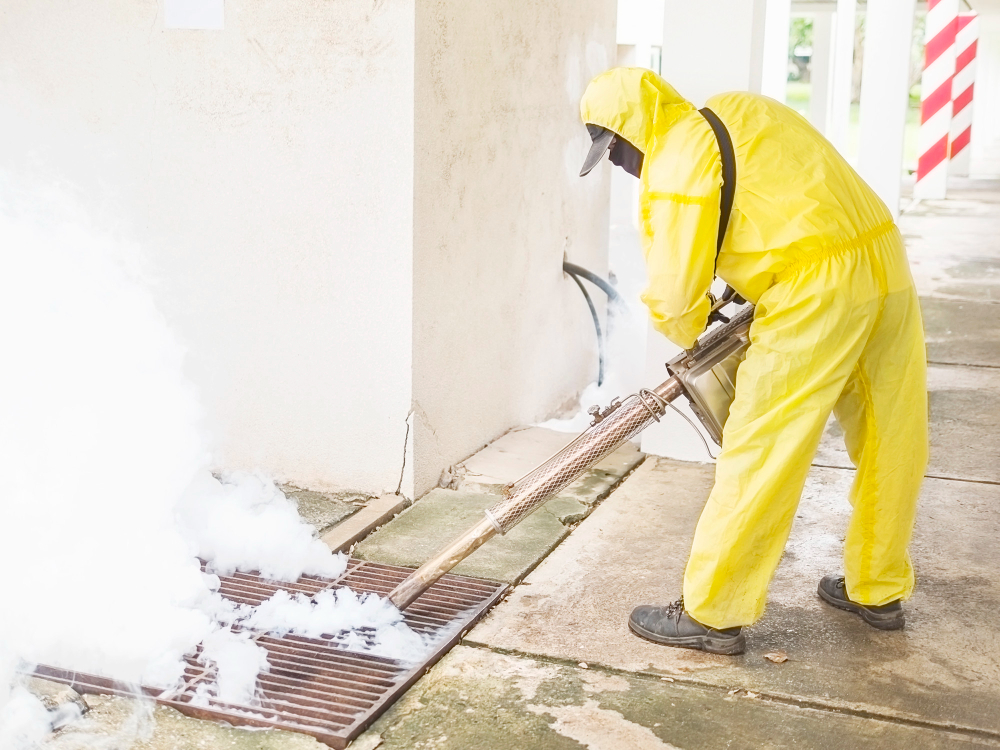
The best time to fog for mosquitoes follows the same logic. Targeting the dawn and dusk windows gives you the highest contact rate with active mosquitoes.
Most experts recommend beginning treatments when outdoor temperatures are consistently approaching 50 degrees Fahrenheit. That window, in late winter to early spring, is when mosquito larvae are just beginning to develop, and adult mosquitoes that overwintered are starting to emerge. Catching them at this stage, before they have a chance to reproduce in large numbers, dramatically reduces the population you will be dealing with all summer.
Yes, and for light to moderate infestations, DIY spraying can make a real difference. Here is what to keep in mind if you go that route.
Use the right product. Look for insecticides containing pyrethrins or synthetic pyrethroids. These are commonly used in residential mosquito control and are effective at killing adult mosquitoes on contact.
Focus on the right spots. Mosquitoes rest in shady, damp areas during the day. That means the underside of leaves, dense shrubs, ground cover, areas around standing water, and shaded spots near your foundation. Do not just spray into open air.
Eliminate standing water first. No spray will solve a mosquito problem if you are giving them unlimited breeding spots. Walk your yard and dump out anything holding water: flower pots, bird baths, clogged gutters, pet bowls left outside, and low-lying areas that stay wet after rain.
Spray in the evening. For DIY treatments, late afternoon to dusk is your window. This is when mosquitoes are most active, when the spray is less likely to evaporate too quickly, and when beneficial pollinators like bees are less likely to be foraging.
Be consistent. A single application will not solve the problem. Plan to treat every 2 to 3 weeks throughout the mosquito season for continued protection.
DIY spraying is a solid starting point, but it does have limits. Coverage can be inconsistent, products vary in quality, and most homeowners miss key resting areas that a trained eye would catch. If you have a larger yard, dense vegetation, or a serious infestation, it is worth calling in a mosquito control professional.
Professional mosquito fogging takes everything about DIY spraying and upgrades it. A trained technician knows exactly where mosquitoes rest, where they breed, and how to apply product in a way that maximizes coverage and residual protection.
Professional fogging uses ultra-low volume (ULV) equipment that disperses fine aerosol droplets into the air and onto surfaces where mosquitoes rest. The treatment reaches deep into shrubs, under leaves, along fence lines, and around shaded areas that a basic spray bottle or consumer fogger simply cannot get to effectively.
Timing is handled by professionals who understand local mosquito behavior and seasonality. Rather than guessing, you get treatments scheduled at the right intervals and adjusted based on weather, rainfall, and how your yard responds. But consider the cost of mosquito control before hiring them.
If you are serious about reclaiming your outdoor space for the long haul, a mosquito misting system is worth considering. These are automated systems installed around your property, similar to a sprinkler system, that release timed bursts of mosquito control product throughout the day.
The beauty of a misting system is that it works on a schedule, even when you are not home. Based on EPA guidance and pest control best practices, the most effective spray times are before noon and after 6 PM, targeting the dawn and dusk windows when mosquitoes are most active. A properly programmed misting system handles all of this automatically.
You can also customize the schedule to fit your household. If you have pets that go out early in the morning or you plan to host a dinner outside, the timing can be adjusted around your routine. The system works quietly in the background, and because the insecticide disperses quickly, exposure to people and pets is minimal when the system is set to run at the right times.
Here is a simple way to think about your options based on your situation:
Light problem, small yard: DIY spraying at dusk with a quality pyrethroid product, combined with eliminating standing water, may be enough to keep things manageable. Start in early spring before the season peaks.
Moderate problem or larger yard: A professional fogging service will give you better coverage and more consistent results. Schedule your first treatment before mosquito season is in full swing in your area, and keep up with regular visits through early fall.
Ongoing problem or you just want it handled: A mosquito misting system takes the guesswork out of the entire process. It runs on your schedule, covers your property consistently, and keeps mosquitoes in check all season long without any effort on your part.
Mosquitoes are predictable. They show up at the same time every year, they are most active at the same hours every day, and they breed in the same kinds of spots season after season. That predictability is actually good news because it means you can stay one step ahead of them. Whether you grab a sprayer and handle it yourself, book a professional fogging visit, or install a misting system that runs on autopilot, the biggest mistake is simply waiting too long to act. Start early, stay consistent, and the yard is yours again.