By
|
May 04, 2026
Did you know that mosquitoes are responsible for over 700,000 deaths every year worldwide due to diseases like malaria, dengue, and Zika?
Despite their tiny size, they remain one of the most dangerous insects. That’s why the effective way to bring their population under control is very important.
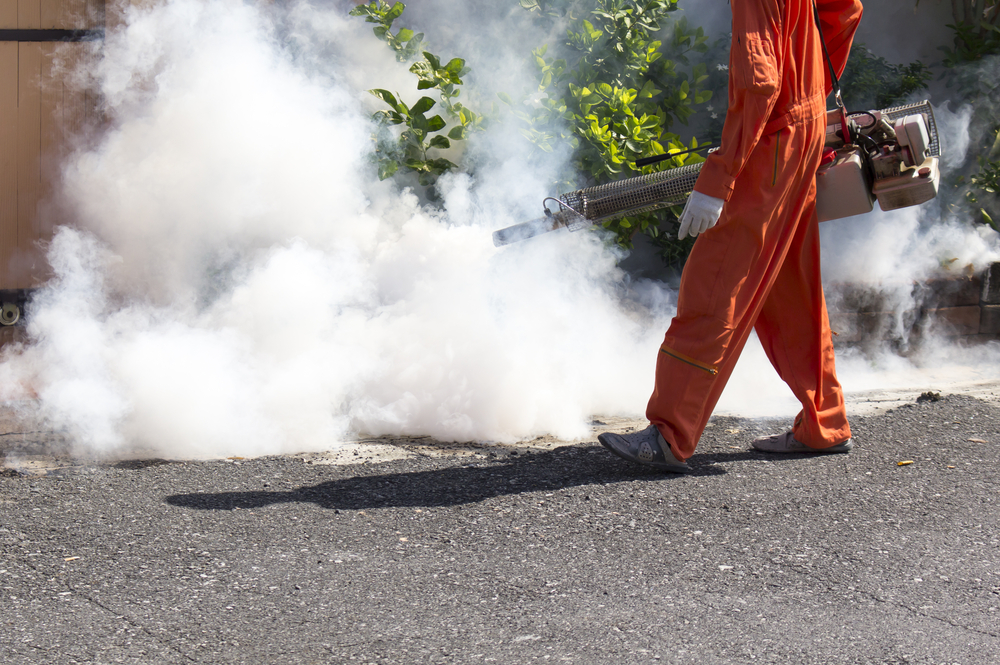
Mosquito fogging is one of the pest control methods that uses a fine mist of insecticide to kill adult mosquitoes on contact, usually in outdoor or semi-open areas.
It is widely used during mosquito outbreaks in residential yards, especially in warm and humid seasons when mosquito breeding increases rapidly.
By releasing a controlled chemical fog into the air, this method targets flying mosquitoes instantly, and it helps reduce biting activity within minutes.
Mosquito fogging is a pest control technique that rapidly reduces mosquito populations by releasing a fine mist of insecticide into the air.
This mist, often called “fog,” kills adult mosquitoes on contact, especially in outdoor environments of residential and commercial buildings such as gardens, streets, parks, and residential areas.
It is a fast-response method to control active mosquito infestations, especially during outbreaks. However, it is important to understand that fogging does not target mosquito eggs or larvae; it mainly focuses on flying mosquitoes.
There are two main types of mosquito fogging methods used in different types of pest control:
Thermal fogging uses heat to vaporize insecticide into a dense, visible fog. This type is highly effective outdoors and in commercial buildings because the thick fog spreads quickly and covers large areas.
Cold fogging, also known as Ultra-Low Volume (ULV) fogging, uses high air pressure instead of heat to create a fine mist.
Both methods are widely used for fogging mosquitoes. But the usage depends on the location and level of infestation.
Mosquito fogging relies on specially formulated insecticides that are effective against adult mosquitoes but break down quickly in the environment.
Here are the chemicals used in fogging:
These chemicals are selected for their ability to quickly kill mosquitoes on contact and minimize long-term environmental impact when used correctly.
A fogging machine converts liquid insecticide into extremely fine droplets. These droplets are dispersed into the air as a mist, which spreads across the treated area.
When mosquitoes come into direct contact with this fog, the insecticide affects their nervous system. It can cause quick paralysis and death.
Moreover, they release a cloud of insecticide that hangs in the air long enough to contact and kill flying mosquitoes.
This is why fogging is often used for immediate relief during high mosquito activity periods.
One important tuning about fogging is that it is very specific in what it targets:
This is an important point. Even after fogging, new mosquitoes can still emerge if breeding sites are not controlled.
When done properly by professionals, mosquito fogging is generally safe. However, some precautions are important:
Remember that safety depends on correct chemical use and proper application methods.
Choosing proper professional treatment can actually help reduce the overall cost of mosquito control over time by preventing repeated infestations.
Fogging provides only short-term relief rather than permanent control.
In general, the noticeable reduction in mosquitoes lasts:
However, this effect is temporary. Mosquito fogging kills adult mosquitoes present at the time of treatment, so once new mosquitoes emerge or fly in from nearby areas, the population can return quickly.
The duration of protection also depends heavily on local conditions.
In clean and well-maintained areas, where there is no stagnant water, the results may last longer.
But in areas with standing water, open drains, or dense vegetation, mosquitoes tend to reappear much faster.
The effectiveness and duration of mosquito fogging depend on the following factors:
Mosquito fogging is a fast and effective solution for reducing mosquito populations, especially during outbreaks or peak seasons.
It provides quick relief by killing adult mosquitoes within minutes. That’s why it is a popular choice for both residential and public areas.
However, it is important to remember that fogging is not a permanent solution. Its effects are temporary and depend heavily on environmental conditions and mosquito breeding activity.
For long-term control, it must be combined with preventive measures, such as removing standing water and maintaining cleanliness.
For the best results and safe application, it is always recommended to rely on professional pest control services such as Skeetercide, which can ensure proper fogging techniques, correct chemical usage, and more effective mosquito management strategies tailored to your environment.
Does mosquito fogging really work for mosquito control?
Yes, mosquito fogging works by quickly killing adult mosquitoes present at the time of treatment. However, it only provides temporary relief and does not eliminate eggs or larvae, so mosquitoes can return if breeding sites are not controlled.
How long does mosquito fogging last?
Mosquito fogging typically lasts 1 to 3 days, and in some cases up to a week in low-breeding areas. The effect is short-term because new mosquitoes can quickly enter or hatch after treatment.
Is mosquito fogging safe for humans and pets?
Mosquito fogging is generally safe when done by professionals using approved chemicals. However, people and pets should stay away during spraying and return only after the area is cleared.
Why do mosquitoes come back after fogging?
Mosquitoes return because fogging does not kill eggs or larvae. If standing water and breeding areas are not removed, new mosquitoes will continue to develop even after treatment.